

Gold is the lifeblood of the WoW economy, and World of Warcraft: The War Within (TWW) has introduced new opportunities and twists for gold-makers in 2025. Whether you need funds for that expensive mount or to keep up with raid consumables, finding the best gold farm is key. This guide compiles the most efficient gold farming strategies – from gathering herbs in Khaz Algar’s new zones to flipping items on the Auction House – all tailored to the current WoW economy. We’ve drawn insights from WoWHead, Reddit, and other community experts to ensure these methods are both profitable and sustainable. Each section breaks down a gold-making method with step-by-step instructions, recommended addons, and a breakdown of gold per hour, difficulty, and any investment required. (Note: Images and charts are disabled in this text-only guide, but we’ve packed plenty of info and tips!)
TWW brings significant changes to professions and item drops that affect gold farming. For example, only Tailoring professionals can now gather cloth drops from mobs, which initially drove cloth prices sky-high. The expansion also continues the region-wide Auction House for commodities, meaning competition is fiercer and market trends can shift quickly across all realms. A seasoned player noted that the best time to make gold was right at The War Within’s launch, when new materials commanded exorbitant prices. Even if you’re starting later, don’t worry – there are still plenty of ways to profit. Let’s dive into the top strategies to make you rich in WoW 2025!

1. Gathering Professions: Herbalism & Mining (Double Gathering)

Summary: If you want a reliable gold farm with minimal setup, gathering professions are the classic choice. In TWW, taking Herbalism and Mining together on one character is arguably the best way to farm gold consistently. You’ll be flying around the new zones harvesting valuable herbs and ores and selling them on the Auction House for hefty profits.
Why it’s profitable: Every expansion launch, crafters rush to buy herbs and ore for leveling professions and making high-end items. In The War Within, new herbs like Arathor’s Spear, Orbinid, Luredrop, Blessing Blossom and others spawn across the four zones of Khaz Algar, alongside new ore types. These materials sold for extreme prices early on, and though they stabilize due to the region-wide market, they remain a steady income source. According to one guide, combining herb and mining yields the fastest gold early in the expansion because you can “gather herbs and ores that are immediately sold” for high prices. Even months later, players report ~10,000 gold per hour with dual gathering during regular times, and much more during peak demand windows.
Step-by-Step: How to Maximize Gold with Gathering
| Step | Description |
|---|---|
| 1. Pick the Professions | Learn Herbalism and Mining on a level 80 character. If possible, use a Druid or any class with instant mount ability to gather without slowing down – druids have a distinct advantage for quick herbing/mining due to Travel Form. |
| 2. Unlock Flying | Ensure you have Skyriding (the TWW version of Dragonriding) unlocked in Khaz Algar for fast travel between nodes. Efficient pathing is crucial for a high gold per hour. |
| 3. Optimize Profession Skills | Invest knowledge points in your gathering specializations to increase yields. For Herbalism, unlock modifiers like Lush or Irradiated nodes which give extra herbs. For Mining, specialize in any refinement or surveying skills to get more rare nuggets. Equip any profession gear that adds +Perception (to find rarer drops) or +Finesse (to gather more quantity). |
| 4. Choose a Farming Route | Identify a loop that hits many spawn points. Community forums and addons can help here. For example, circle areas with dense herb clusters in The Ringing Deeps and Ara-Kara zones, or a path that alternates between herb and ore spawns to minimize downtime. Addons like GatherMate2 will mark herb/ore locations on your map, and Routes can help draw an optimal path. |
| 5. Use Addons for Efficiency | Turn on tracking for both herbs and minerals (since you have both professions). In modern WoW, you can track all gatherable objects simultaneously. Addons such as FarmHud can create a heads-up display for node tracking. Also consider LootAppraiser, which tells you the value of each session’s haul and your gold per hour in real-time. |
| 6. Watch the Market | Check the Auction House prices for the herbs/ores you’re gathering. Sell during high-demand days if possible. For instance, raid nights (Tue/Wed) often see potions/flasks (made from herbs) spike in price, so herbs may sell higher on those days. If prices seem low, you can hold inventory for a short time – but don’t hoard too long as prices tend to decline as more players farm. |
| 7. Post Auctions Smartly | When listing, consider splitting your stacks to cater to different buyers (e.g., stacks of 5 or 20 for crafters). With the region-wide AH for commodities, your items should sell quickly at the current market rate if you post at the lowest price. One redditor suggests posting at the going price and not undercutting too steeply – commodities sell fast due to high demand. |
| 8. Gold per Hour | In the initial weeks of TWW, skilled herbalists/miners easily cleared 50k+ gold per hour due to sky-high material prices (some even reported 80k/hour in peak chaos). This tapers off to a stable rate – often 10-20k gold per hour with moderate competition. Still, gathering remains one of the best gold farms in 2025 for consistent income with low effort. |
Tip: Don’t overlook Skinning as an alternative gathering gold-maker. If Herbalism/Mining feels crowded, skinning creatures can also turn a profit. New beasts in TWW drop hides and scales used in Leatherworking. Find an area with lots of beasts (for example, dens or hunting world quests) and aoe them down in a group, then skin everything. While typically a bit less lucrative than herbs/ore, a good skinning spot with fast respawns (a “hyperspawn”) can still net solid gold. Plus, skinning can pair with leatherworking to craft drums or profession equipment for extra profit.
2. Dungeon Farming and Instanced Content

Sometimes the best gold doesn’t come from the open world, but from within instances. Dungeon farming can be a lucrative strategy in TWW, especially due to some new mechanics and drops. We’ll cover two key approaches: solo farms for raw gold/materials (like the new cloth farm) and group farms for BoE items.
2.1 Solo Cloth Farming (Tailoring Bonus) – Darkflame Cleft Method
One of the new gold opportunities in The War Within is farming cloth as a tailor. Blizzard changed cloth drops so that only players with Tailoring get significant cloth loot from mobs (non-tailors see almost no cloth at all). This means tailors effectively have a monopoly on cloth drops, which made cloth like Weavercloth extremely valuable early on. In fact, a fast cloth farm can reach about 50,000 gold per hour in loot value under the right conditions. Even as prices normalize, cloth farming remains highly profitable and is a lesser-known gold mine for those willing to spec into tailoring.
How to Farm Cloth in Dungeons:
| Step | Description |
|---|---|
| 1. Learn Tailoring | Learn Tailoring: If you’re serious about cloth farming, make sure your character has Tailoring. Level it up to max in TWW and invest in the specialization that increases cloth drops (often called Textile Treasures or similar – maxing this will greatly boost how much cloth you loot). According to player findings, being a tailor dramatically increases Weavercloth drop rates from humanoid enemies. |
| 2. Gear Up a Bit | Gear Up a Bit: This farm works best if you can comfortably solo mobs in a dungeon. Gear from questing or casual content should suffice, but the faster you kill, the more loot per hour. If needed, lower the difficulty setting or bring a friend (though solo means you keep all the loot). |
| 3. Darkflame Cleft Follower Dungeon | Darkflame Cleft Follower Dungeon: A highly recommended spot is the Darkflame Cleft dungeon. This is one of the new “Follower Dungeons” in TWW (where you can queue solo with NPC allies). It’s packed with humanoid mobs perfect for cloth farming. Run through the dungeon clearing all trash packs – these mobs have a high chance to drop Weavercloth for tailors. Once you finish (or reach the end boss), reset the dungeon and repeat. Follower dungeons can be re-run without the typical daily lockout, making them ideal for farming. |
| 4. Loot Everything | Loot Everything: Pick up all the cloth drops and any BoE greens/blues. Besides cloth (which is the main money-maker), you can send uncommon gear to an enchanter alt to disenchant into dust (or sell the greens if they have value). The raw gold from looting and vendoring gray items here also adds up a bit. |
| 5. Sell the Cloth | Sell the Cloth: Weavercloth (and any rare cloth like Dawnweave or Duskweave) sells very well on the Auction House, since it’s needed for Tailoring crafts and possibly for Inscription (Darkmoon cards) crafts. Early on, these were extremely expensive due to low supply. Post your cloth on the AH in stacks (some crafters buy in bulk, so consider big stacks of 100, or whatever the market supports). Keep an eye on price trends – as more tailors start farming, prices might drop over weeks, so cash in while margins are high. |
| 6. Expected Profit | Expected Profit: Reports from players suggest you can earn tens of thousands of gold per hour with this method. One guide boasted “up to 50,000 gold in just one hour” by farming cloth intensively. This assumes optimal conditions (fast clears and decent RNG on drops). Even at lower efficiency, you might see 20-30k/hour, which is excellent. The main limitation is it requires you to dedicate a profession slot to Tailoring and spend time leveling it – but the payoff can be big. For a tailor, this is arguably one of the best gold farming methods of 2025 in WoW. |
Tip: If dungeon grinding isn’t your style, tailors can also farm cloth in the open world via 2×4 farms. 2×4 farming means two parties of 4 players each (to maximize mob tap potential) grinding in the same spot. Find an area in Khaz Algar with fast-respawning humanoids, team up with fellow farmers, and mass-kill to force quick respawns. This was a popular tactic early on for cloth and BoE farming. Just remember, you’ll have to share loot in a group, and only tailors will see the cloth drops, so ideally have multiple tailors in the group to multiply cloth gains.
2.2 Legacy Content and Raw Gold Farms
Sometimes you just want guaranteed gold without worrying about the market. That’s where raw gold farms come in – activities that give gold directly from vendors or quests. While Blizzard has nerfed many old tricks, you can still make a few thousand gold steadily by clearing older content.
Old Raids for Raw Gold: Tackle old expansion raids (Legion, BFA, etc.) on the highest difficulty you can solo. These instances drop lots of items that vendor for gold. For example, a full clear of a Legion raid on Mythic can net around 4k-5k gold just from looting and selling gear. Running several old raids or dungeons in an hour can yield roughly 10k gold/hour in pure vendor gold– not as high as gathering or AH flipping, but it’s 100% safe from market fluctuations. Plus, you might snag some transmog items or rare mounts as a bonus.
Step-by-step: Choose a raid like Nighthold or Antorus (Legion) or Ny’alotha (BfA) if you’re strong enough. Clear trash and bosses, loot everything, and use a vendor mount (or go back to town) to sell it all. Equip auto-vendor addons (like Dejunk or Scrapp) to speed up selling gray items. Pro tip: If you have Burning Crusade or Wrath raids on farm, those drop lots of cloth and old mats which you can also auction for niche markets. It’s a slower pace, but some players enjoy the nostalgia while still earning some gold.Callings, World Quests, and Weekly Events: In TWW, check your map for any World Quests that reward gold directly or valuable items. Occasionally, there may be a WQ giving, say, 600 gold for a few minutes of work. Also, weekly events or quests (like a weekly “Aid Khaz Algar” quest) might hand out a chest with gold. If you have many alts (alternate characters), doing these quick gold quests on each alt can add up significantly. In fact, one forum user noted that a player with 50 alts doing all the gold-yielding world quests could earn on the order of 400k-500k gold just from that routine. That’s extreme, but it shows how an “alt army” can turn even modest rewards into major paydays. For a more casual approach, even having a few alts do weekly quests for ~1k each can net a tidy sum with little effort.
“Call to Arms” Dungeon Satchels: If you enjoy (or don’t mind) playing a tank or healer, the Dungeon Finder often offers a Call to Arms satchel for those roles when they are in short supply. These Satchels of Helpful Goods usually contain some raw gold (around 500+), potions, and occasionally rare pets or mounts. Queue up for heroic dungeons or LFR when the satchel is available; the run itself gives gold and loot, and the satchel is a bonus. It’s not the highest gold/hour, but it can break monotony and still feel rewarding. Plus, you’re helping the queue times – and getting paid for it!
2.3 BoE Farming (Bind-on-Equip Items)
BoE items are high-level gear drops that are not soulbound, meaning you can sell them on the Auction House. New expansions usually introduce BoE epics from world mobs or dungeon/raid trash, and these can sell for massive amounts of gold – especially early in a patch when they are best-in-slot for raiders who are willing to pay. Farming BoEs is a bit of a gamble (due to RNG), but a single lucky drop can be a jackpot.
How to Farm BoEs:
- Open-World 2×4 Farms: As mentioned earlier, group farming in the open world can yield BoEs. Identify an area in TWW where rare elites or high-level mobs spawn abundantly (for example, areas near raid entrances or high-level quests). Form a farming group – ideally 2 groups of 4 players each – and mow down packs of mobs quickly. The more mobs you kill, the higher your chances at a BoE drop. Many War Within BoEs are ilvl epics that have low drop rates, but when they drop, they could sell for tens or even hundreds of thousands of gold in the first few weeks. (Be sure to set loot to appropriate settings – in group farms, typically each mob’s loot is personal, so everyone has their own chance at drops.)
- Raid Trash Farms: If you’re part of a guild or community group, you can organize raids where you clear the trash mobs in a new raid instance without killing bosses (trash can respawn on a timer if you don’t kill certain bosses). In War Within’s first raid tier, guilds often do “trash runs” on Mythic difficulty hoping for BoE drops. These items can be ilvl gear that mythic raiders covet, and they often hit the AH for astronomical prices initially. Even after the rush, certain BoEs (with unique transmog appearances or useful stats) remain valuable. Keep in mind you might need a solid group to farm raid trash efficiently, and usually you’ll have to roll or share BoEs that drop.
- Dungeons and Rares: Some BoEs can drop from rare spawns or dungeon bosses in TWW. While you generally run dungeons for other rewards, it’s good to remember that any BoE blue or epic you see can potentially be sold. Check its market value before vendoring! For example, a BoE trinket or weapon from a TWW dungeon could be a twink item that fetches a nice price.
Selling BoEs: Once you get a desirable BoE, put it on the Auction House at a competitive price. It helps to check sites like The Undermine Journal or TSM to gauge what the item is worth across the region. Early on, don’t be afraid to charge a premium – rich players will pay for an upgrade rather than wait. Tip: If the BoE is an upgrade for you or a friend, consider if it’s more valuable to use it. But if gold is the goal, selling is usually the way. According to a gold guide, “selling BoE items is a solid gold farming method in The War Within”, as these items often drop from world content and dungeons and can bring in significant revenue.
Risk vs Reward: BoE farming is high variance. You could farm for 3 hours and get nothing notable (in which case you’d have been better off gathering), or one lucky BoE drop could equal the gold of days of herb farming. Many players treat BoE hunting as a side activity – they’ll do it for a while, but not rely on it solely. If you enjoy the grind and the excitement of the “big drop,” it can be very rewarding. Just remember, as the patch progresses, BoE prices drop (supply increases, demand decreases as players gear up), so the sooner you obtain and sell them, the better. Also, always stay safe: never try to sell a BoE for real money and be cautious when trading expensive items (to avoid scammers, using the AH is safest even with the cut).
3. Crafting & Profession Strategies
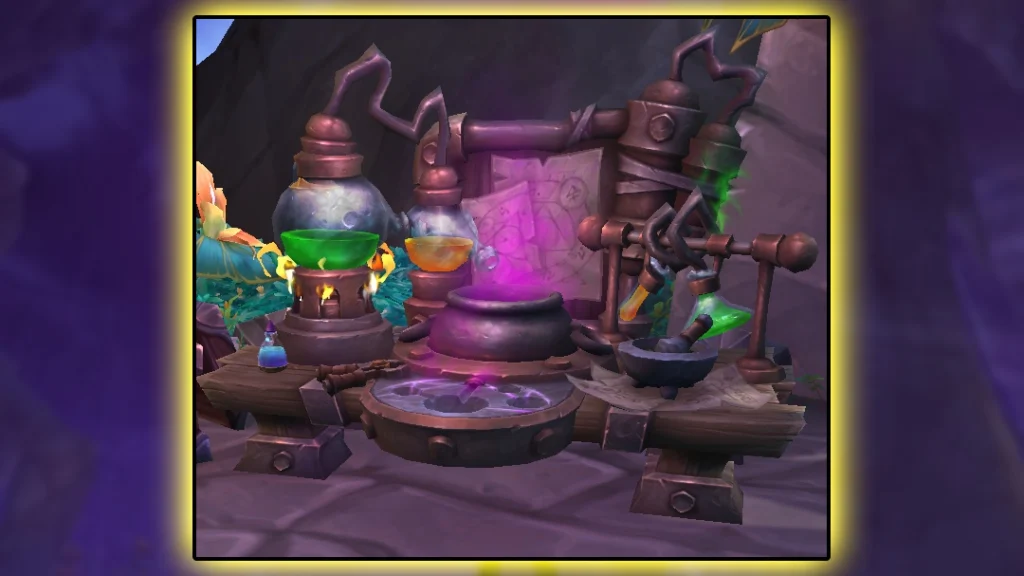
Crafting professions in WoW have the potential to generate enormous wealth, especially in The War Within which continues the deep profession system from Dragonflight. With the right recipes and market savvy, you can turn base materials into valuable products and even make gold while offline by fulfilling work orders. Here we’ll explore how crafting, profession cooldowns, and clever use of professions can line your pockets.
Top Gold-Making Professions in 2025: According to community consensus, the most profitable professions in The War Within are Enchanting, Alchemy, and Blacksmithing, with Jewelcrafting as a strong contender. These cover a range of markets: enchants and consumables (always in demand), and crafted gear (high-ticket items). That said, almost any profession can make gold if you play it right – even Tailoring or Inscription have their moments (tailoring for bags and cloth gear, inscription for Darkmoon cards, etc.). The key is understanding what sells and specializing effectively.
3.1 Consumables & Enhancements (Alchemy, Enchanting, Cooking)
Raiders and PvPers constantly buy consumables, making this a steady market. Alchemy lets you craft potions, phials (flasks), and cauldrons. Enchanting produces weapon and armor enchants that every geared player will need. Cooking provides food buffs. These are “consumable” because they get used up, ensuring recurring demand.
Alchemy: Focus on high-demand potions and phials. In TWW, find out which potions are meta for DPS or healing. Craft those, especially around raid reset days. Also look at transmutation specializations – often alchemists can transmute one material to another (for example, converting one Awakened element to another type). If one elemental reagent is cheaper, buy it and transmute to the expensive one for profit. Another alchemy perk: making Multicraft spec can sometimes yield extra potions for free, effectively increasing profit margins. Just keep an eye on herb costs (maybe pair with Herbalism or have a supplier). Early expansion, flask (phial) prices were huge relative to herb costs, making alchemists very rich until things balanced out.
Enchanting: This profession shines throughout the expansion. Every piece of gear (weapons, rings, etc.) will likely be enchanted by its owner, and with each new gear upgrade, they need new enchants – a continuous cycle. Target the popular enchantments (e.g., weapon enchants that give DPS procs, or chest enchants for stats). If you level Enchanting and invest in the right specialization (for example, Insight of the Blue for resourcefulness or Draconic Disenchantment for material gains in DF, check TWW equivalents), you can increase your yield or reduce costs. Enchanting has the advantage of being both a supplier and a producer – you can disenchant unwanted gear into mats and then use those mats to create enchants to sell. Many crafters use an addon like CraftSim to ensure their enchants are profitable to make. A common tip from veteran gold-makers: craft items only if profit is >10% after accounting for Auction House fees. This ensures you have a buffer in case of slight price drops. Enchanting can also make profession tools and magical materials that sell well (for instance, enchants for profession accessories or illusion crystals for transmog effects).
Cooking: While not as big a money-maker as Alchemy or Enchanting, cooking can still net gold by selling feasts or individual buff foods. If there’s a particularly valuable ingredient (like a fish that’s hard to catch) and you have the patience to farm it or the capital to buy it cheap, you can cook it into buff food and sell at a markup. Feasts (which provide group buffs) are often supplied by guilds, but you can sell them on AH too. It’s worth having cooking maxed on at least one character for convenience and occasional profit.
Step-by-Step Crafting for Profit:
| Step | Description |
|---|---|
| 1. Level and Specialize | Level and Specialize: Fully level your crafting profession and choose specializations that enhance profit-making ability. For example, an alchemist might specialize in Potion Mastery to proc extra crafts, or an enchanter might spec into resourcefulness to use fewer materials per craft. These choices directly affect your bottom line. |
| 2. Secure Recipes | Secure Recipes: Some lucrative recipes may require reputation or end-game content (e.g., a high-end alchemy trinket, or a best-in-slot enchant formula). Pursue those if they are within reach – being one of the few crafters with a recipe means you can charge more. Also, weekly profession quests in TWW can yield knowledge points or recipes – don’t skip them. |
| 3. Gather Materials Smartly | Gather Materials Smartly: Either gather the mats yourself (minimize cost by farming herbs/ore, etc.) or buy low on the Auction House. A golden rule in crafting: buy when mats are cheap, and sell when finished goods are in demand. For instance, mid-weekend herb prices might dip when many people are farming, so that’s a good time to stock up on potions mats, then craft and list potions Monday-Tuesday when raid teams are preparing for resets. |
| 4. Use Addons for Efficiency | Use Addons for Efficiency: Utilize CraftSim (an addon) to calculate profit margins on crafts in real-time. It can factor in material costs (even pulling from AH prices) and show expected profit per craft. Only make items that show a healthy profit. Also use TradeSkillMaster (TSM) to manage your crafting queue and inventory. TSM can automatically restock crafts that are profitable according to a custom price source you set. |
| 5. Consider Work Orders | Consider Work Orders: If The War Within has a work order system like Dragonflight did, take advantage of Crafting Orders. High-end gear or items that are BoP can be requested by other players. Fulfilling public orders might yield a small commission + first-craft knowledge, but the real gold is in guild or personal orders where you can negotiate a larger fee. If you are a known specialized crafter (say the only one on your server who can craft a +5 skill weapon), you can charge very large commission gold for your service. Advertise your crafting in trade chat or community discords to get customers. |
| 6. Profit and Iterate | Profit and Iterate: Keep an eye on the market each week. If you see, for example, that Flask of XYZ suddenly dropped in price due to too many alchemists, pivot to another item or profession. Flexibility is key. Also watch for content patches – a new raid tier might introduce new crafting reagents or higher ranks of enchants, which resets the market in your favor again. Always be ready to capitalize when a patch or event drives demand (for instance, the introduction of a new PvP season could spike demand for certain consumables). |

3.2 Crafted Gear & Upgrades (Blacksmithing, Leatherworking, Tailoring, Jewelcrafting, Inscription)
Crafting gear can be the most investment-heavy but also high-reward method. In TWW, crafted gear can sometimes rival raid gear, especially when upgraded, so players will pay top gold for armor, weapons, or accessories that improve their character.
Blacksmithing & Weaponsmithing: Crafting armor for plate users or weapons for all can be extremely profitable, particularly early in the expansion or when a new season begins. If you were among the first to max Blacksmithing and specialize (e.g., into weapon smithing or a particular armor type), you could craft epic weapons with optional reagents that rival Mythic raid gear. These items often require special soulbound mats from content (which the buyer provides via work orders) plus base mats like ore and cool elements that you provide. Blacksmiths in War Within might also make profession tools (like pickaxes for miners) that sell decently. Additionally, legendary or unique equip pieces (if any in TWW) would be a goldmine – for example, if there is a boe epic weapon drop recipe or a Darkmoon trinket crafted via Inscription, these items combine crafting with BoE selling. Always calculate your costs: sometimes crafting an item to sell on AH outright can be risky if the mats are expensive. Many crafters prefer the craft-on-demand approach (i.e., use the crafting order system so the buyer provides some materials or binds the item, reducing your risk).
Leatherworking & Tailoring (Gear & Bags): Leatherworkers craft leather and mail armor plus specialty items like drums (group haste buffs) and profession accessories. Tailors craft cloth armor and also bags. Ah, bags – an evergreen seller. In The War Within, tailors can make the Duskweave Bag (36-slot) and Dawnweave Reagent Bag (38-slot), which every player wants more of. Historically, selling the largest bag available is a sustainable income: early on, new bags sell for thousands of gold each. Even later, as new alts or players need bags, they still move. Focus on bag crafting if you’re a tailor; it’s often low effort and consistent profit (just watch cloth prices). As for leatherworking, aside from armor (which you’d likely fill via orders), you can target consumables like armor kits or drums if they exist in TWW. Those are used regularly and can be sold on AH.
Jewelcrafting: If gems are a thing in TWW (sockets on gear), JC can make and sell gems for stats. These are usually steady sellers if the stat bonuses are worthwhile. JCs also craft trinkets and rings – for example, in many expansions, Jewelcrafters have a set of craftable gemmed trinkets or the famed Jeweled Panther mounts (in Mists). Keep an eye out for any special JC recipes in War Within, like perhaps a Greatstaff of Jewelcrafting or something unique. Prospecting ore (breaking it into gems) is another role of JC. You can buy ore in bulk and prospect it – sometimes the value of the resulting gems (and tradeable side products like fragments or essences) exceeds the cost of the ore, giving you a profit. A forum comment even noted “flipping ore with a maxed miner is great gold, especially if you have an alchemist to transmute back & forth” – an example of using Mining + JC + Alchemy in synergy (mine ore, prospect gems, or transmute materials to keep adding value). If the numbers line up in your favor, this can be like printing money. Use spreadsheets or the TSM addon to determine if an “ore shuffle” is profitable in the current market.
Inscription: Scribes can earn gold through a few niche but lucrative products. The Darkmoon Card system usually gives new trinkets each expansion – by crafting Darkmoon Decks, inscribers can sell high-end trinkets especially early on. This requires making and combining cards (which needs a lot of herbs for pigments). If you go this route, it’s a bit of a gamble (hoping to assemble full decks), but a completed Darkmoon Deck (of the highest ilvl in TWW’s first Darkmoon Faire) can sell for a fortune to min-maxers. Inscription also makes missives (stat choice items), profession treatises (one-time crafts that give knowledge, these sold very well in DF), vantus runes for raids, and contracts for reputation. Monitor which of these have demand. For instance, if a new raid is out, Vantus Runes (which help on a specific boss) often see a spike in sales as guilds progress – an opportunity for scribes.
Crafting: Gold per Hour & Considerations: Crafting doesn’t have a straightforward gold/hour like farming does because it depends on how fast items sell. You might spend 1 hour crafting/enchanting and posting auctions, and those auctions could yield 50k profit by the next day – effectively 50k/hour for your time, but it’s not instant. What’s important is profit margin and volume. Some crafters make millions per week by dominating a market (for example, by being the go-to alchemist or by flipping materials through crafts). Keep in mind crafting often requires a gold investment up front (for recipes, mats, leveling the profession). But once established, it can be like a passive gold generator as you craft in bulk and sell while you do other things.
Tip: Spreadsheet is your friend! Serious gold-crafters maintain a simple spreadsheet or TSM ledger of crafting costs vs. selling price to ensure they always craft at a profit. Also, consider the Opportunity Cost – if materials sell for more than the crafted item, just sell the mats. Don’t blindly craft; sometimes the market flips. Adaptation is key in the WoW economy.
4. Auction House Flipping and Trading

If you have a knack for economics, Auction House flipping can be the most profitable gold-making method of all. Flipping means you buy items at a low price and resell at a higher price, profiting from the difference. Unlike farming or crafting, flipping doesn’t require you to kill monsters or level professions – but it does require knowledge of the market and some starting capital. In 2025’s WoW economy, with the region-wide Auction House for commodities, flipping is highly competitive but still incredibly rewarding for savvy traders.
Key Flipping Strategies:
- Commodity Flipping: Even though herbs, ores, etc. are region-wide, prices still fluctuate. A simple strategy: buy in bulk when prices are unusually low, then relist them when the price normalizes. For example, if a glut of mining bots (ugh) causes Ore prices to dip on a Tuesday, you could purchase a few thousand ore, then wait a couple days and sell when the price per ore goes back up by a few gold. The profit margin might be small per item, but in bulk it’s huge. Be careful with deposit fees (for commodities, deposit is small and they almost always sell if you’re lowest price). This is relatively low-risk, low-margin.
- Rare Item Sniping: This is the classic flip – find underpriced rare items (like battle pets, mounts, transmog pieces, BoE epics) and snipe them. Perhaps someone posts a pet for 5k that is commonly worth 30k region-wide – you buy it out and relist at 30k. This requires patience and a good eye. Addons can scan the AH and alert you to deals. TradeSkillMaster’s “Sniper” function is one such tool that continuously scans for items listed under a certain percentage of their market value. Another addon, Auctionator, has shopping lists where you can search for specific items or types of items (e.g., search all “epic” quality armor below a certain price). Flipping rare items can yield big one-time profits. Just note that unlike commodities, these might take time to sell (since they cater to niche buyers). Ensure you price them reasonably and factor in the 5% AH cut.
- Reselling Crafted Goods: If you’re not into crafting yourself, you can let others do the work and still profit. Sometimes crafters dump their goods at low prices (either leveling up or undercut wars). You can swoop in, buy those cheap goods, and relist them later at a higher price. A simple example: A blacksmith posts a bunch of plate armor at a loss because they crafted too many – you buy them, hold for a week, and sell when there’s less competition. This is a bit risky (demand might not return), but knowledge of the item’s value is your strength.
- Market Cornering: Advanced flippers with big wallets might try to monopolize a particular item. For instance, you notice a particular enchanting material is always in short supply. You quietly buy out any that appear below a certain price, gradually driving the price up, and then sell from your stock at the higher price. This “resetting the market” approach can be profitable but also risky and sometimes viewed as aggressive. If other goblins notice, they might dump stock and foil your plan. Only attempt this if you’re experienced and can absorb potential losses. (A common adage: don’t try to corner markets that are too large – focus on niche markets where you truly control a large portion of supply.)
Tools of the Trade (Addons for Flipping):
Successful Auction House play relies on good data. It’s strongly recommended to use addons like TradeSkillMaster (TSM) or Auctionator to help. TSM is a powerhouse that lets you track historical prices, set up automated shopping operations, and post items in batches with custom price formulas. One guide calls TSM “one of the best add-ons” for auction analysis and notes that Auction House flipping “can be among the most profitable” ways to make gold. If TSM feels too complex at first, Auctionator is a simpler alternative for scanning and posting. Additionally, websites like The Undermine Journal or Oribos Exchange (if updated for TWW) give insight into price trends across the region – very handy for identifying when something is a bargain.
We also offering wow leveling services if you wanna save time – always can check our services!
Step-by-Step: Basic AH Flipping for Beginners
Real-Player Insight: One Reddit user advised that successful flipping often requires frequent cancel-scanning and reposting – basically, if you’re flipping high-volume items, you may need to check often and cancel your auction if someone undercuts heavily, then repost at the new lowest price. This can be a bit of a chore, but it’s part of playing the AH game at the top level. The payoff is waking up to thousands of gold in your mailbox from auction sales – a lovely feeling indeed.
5. Lesser-Known Gold Farms & Player Tips

Beyond the mainstream methods above, the gold-making community (especially on Reddit’s r/woweconomy) often shares hidden gems – niche farms or tricks that can yield surprising profits. Here are a few player-discovered tips that might be worth trying in The War Within:
Acuity Farming with Alts: TWW introduced a concept of “Acuity” (possibly a profession knowledge resource or crafting energy). Some players devised that having multiple alts to farm Acuity or do concentration crafts can generate passive income. For example, an Enchanter alt army can each perform a daily craft that produces a valuable item or material (like a cooldown). While any one character’s output is limited, having many alts do it multiplies the gold. One discussion highlighted that it’s “not just about cooldown crafts anymore (though those will still print gold)” – an alt army can become “a full-blown economic powerhouse” by leveraging multiple professions across characters. In simpler terms: if you enjoy managing many alts, consider giving each two lucrative professions and do their short daily tasks; the aggregate gold from 5-10 alts doing this can be huge for minimal playtime on each.
Secret Material Farms: Keep an ear out for any quirky farms. For instance, sometimes a specific quest item or junk item can be farmed and vendored or traded. Earlier in TWW, there was buzz about Odd Glob of Wax – an item from disturbed earth piles. It turned out to be for a quest, but for a while people experimented with farming the containers that held it for materials. While that particular thing was nerfed, the point is: stay curious. If you find a spot or quest that showers you with items, evaluate if those can be sold. Occasionally Blizzard adds events (like a holiday boss or a timewalking vendor) where you can get tradeable loot; savvy players take advantage to flip those on AH.
Transmog and Pet Hunting: While not the fastest gold per hour, farming old dungeons for rare transmogs or collecting battle pets to sell can be relaxing and eventually lucrative. For example, running old raids like Firelands for the Scythe of the Unseen Path (just an example name) or camping rare elites that drop unique appearance gear can net items that transmog collectors will pay thousands for. Similarly, some battle pets from old content (rares from raids, holiday event pets, etc.) can be sold – either learned then caged, or directly if cageable. Check pet prices on your AH; you might be surprised that a pet you got in a retro raid is worth a lot. These methods are “lesser-known” in that they cater to niche markets, but the gold is as good as any other once the item sells. It’s a more long-tail strategy: you accumulate a inventory of mogs/pets and they might sell slowly over weeks, but each sale is pure profit since the “farm” cost was just your time. Consider this an option if you’re burnt out on the main farming circuit and want to mix it up.
Use the Wow Economy Community: A tip for staying ahead is to actively follow communities like the /r/woweconomy subreddit or gold-making Discords. Players often share when they find something profitable, or conversely warn when a market is crashing. For example, one user might post “Cloth drop rates nerfed into the ground, switch to herbs!” or “Discovered a spot where you can fish up epic gems in TWW”, etc. By keeping in the loop, you can capitalize on short-lived opportunities (some farms are most profitable before they become widely known or before Blizzard hotfixes them). So always keep learning – the WoW economy is dynamic, and those who adapt will prosper.
6. Comparison of Gold Farming Methods

Finally, let’s compare these methods side by side on key factors: Gold Per Hour, Difficulty, and Investment Required. This will help you decide which method suits your playstyle and goals. (Gold per hour figures are approximate and can vary with server economy and personal efficiency.)
| Method | Description |
|---|---|
| Dual Gathering (Herbalism + Mining) | Dual Gathering (Herbalism + Mining): Gold/hour: ~50k+ early expansion, stabilizing to ~10-20k. Difficulty: Low – easy and relaxing, though competition can reduce yields. Investment: Low (just need to level professions and have flying; addons like GatherMate2 can help). Great for steady income and beginners in gold farming. |
| Skinning (and Fishing) | Skinning (and Fishing): Gold/hour: ~5-15k (depends on leather/fish prices; not as high as herb/mining unless a rare material is in demand). Difficulty: Low – kill and gather. Investment: Low (level profession; might need decent gear to kill mobs quickly). Use when market favors leather or if you prefer mob grinding over node hunting. |
| Tailoring Cloth Farm (Dungeon runs) | Tailoring Cloth Farm (Dungeon runs): Gold/hour: ~30-50k for dedicated cloth farms (early on; may drop later but still strong). Difficulty: Medium – requires tailoring profession and ability to solo farm efficiently. Investment: Medium – you invest a profession slot and time to level it. If done right, very lucrative (niche method that many casual players overlook). |
| Legacy Raid Raw Gold | Legacy Raid Raw Gold: Gold/hour: ~5-10k (fixed, via vendoring items). Difficulty: Low (just brute-force old content; trivial combat at level 80). Investment: Low (no special setup, just some time). Good for guaranteed income and zero reliance on the economy, but much lower yield than current content farms. |
| BoE/Transmog Farming | BoE/Transmog Farming: Gold/hour: Highly variable – could be near 0 on a bad day, or one drop worth 100k+. Difficulty: Medium – involves efficient mob farming or group coordination; also dealing with RNG. Investment: Low to Medium – mainly time, though optimal results may require group finding or high-level gear. Use this if you enjoy the gamble and potentially big payouts. |
| Crafting Professions (Alchemy, Enchanting, etc.) | Crafting Professions (Alchemy, Enchanting, etc.): Gold/hour: Variable – A skilled crafter can easily earn tens of thousands of gold per day with just a bit of crafting and AH posting. For example, crafting in-demand items can feel like ~20-30k gold/hour of effort, sometimes more. Difficulty: Medium/High – you need market knowledge, an understanding of crafting mechanics, and strategy (when to craft, what to craft). Investment: High – costs gold to level professions, buy recipes, and often to purchase materials upfront. However, once set up, this can become a passive gold engine – your “hour” of work could pay off over the week as items sell. Ideal for players who like the economic game and are willing to invest in the long term. |
| Auction House Flipping | Auction House Flipping: Gold/hour: Potentially the highest, but very skill-dependent. Top goblins can make hundreds of thousands of gold in a week just flipping, which if averaged out could be 50k+ gold/hour of “work”. However, beginners might see much less until they learn the ropes. Difficulty: High – requires deep knowledge of item values, patience, and attention to detail. There’s also risk of losses if done recklessly. Investment: Medium to High – you need some starting capital (even 20k gold is enough to begin, but having 100k+ gives more flexibility). Also an “investment” in addons (like learning TSM) and time to scan markets. If you love the idea of playing WoW’s version of the stock market and manipulating the WoW economy, this is your calling. Just remember, “buy low, sell high” sounds simple but mastering it takes practice. |
| Alt Army (Multiple Characters) | Alt Army (Multiple Characters): Gold/hour: Can be very high in aggregate but comes from many small parts. For example, if you have 10 alts each doing 30 minutes of chores that earn ~1k each, that’s 10k for 5 hours of total work – effectively 2k/hour per character, but you were multitasking across many. Some extreme cases push this further (50 alts for 400k/week as noted). Difficulty: Low per alt (the tasks are easy), but High organizationally – managing many characters can feel like a part-time job. Investment: High – you need to level many characters and often gear or profession-level them to maximize returns. This method suits those who already have a roster of alts or enjoy leveling and can turn that into a routine that pays off. |
In summary, if we’re talking pure efficiency and you’re starting fresh in War Within: Dual gathering is hard to beat for quick, straightforward gold especially at launch. If you’re more advanced, combining crafting with AH savvy will eventually yield far more gold than raw farming, but it requires knowledge and capital. Many players do a mix – e.g., gather to get initial funds, then invest in crafting or flipping to exponentially grow their wealth.

Conclusion & Final Tips
Becoming rich in WoW is a marathon, not a sprint. The best gold farm 2025 might be different from the best in 2024, as metas shift and patches come and go. By focusing on efficient methods like those above, you’ll build a strong foundation. Remember to play to your strengths and interests – if you hate grinding herbs, you’re less likely to stick with it (maybe try flipping or crafting instead). The most sustainable gold farming method is one you enjoy enough to repeat as needed.
A few closing tips to boost your gold-making journey in The War Within:
Use Addons & Tools: Leverage addons such as TSM, Auctionator, GatherMate2, LootAppraiser and others to automate tedious parts of gold farming. They will save you time and help avoid mistakes (like selling an item far below value). Also consider checking The Undermine Journal for price histories and trends – it’s like a stock chart for WoW items.
Stay Informed: The WoW economy can change with a single hotfix or player discovery. For example, a patch could nerf a drop rate or introduce a new repeatable quest that floods gold. Keep an eye on WoWHead news, Blizzard forums, and the r/woweconomy subreddit for updates. A savvy gold-maker pivots when needed; don’t cling to a dying market.
Avoid Burnout: It’s easy to get caught up in the gold rush and burn yourself out farming 10 hours a day. Pace yourself. Do a mix of activities to keep it fresh. Perhaps run some dungeons with friends, then do a bit of gathering, then play the AH before logging off. This way you’re making gold without it feeling like an endless chore.
Watch Out for Scams: As your wealth grows, be careful with it. Don’t trust random “trade chat deals” that seem too good to be true. Always use the Auction House or guild bank for big transactions to have a safety net. And never share account info or fall for “duplicate gold” tricks – common sense, but worth stating.
With the strategies and insights in this guide, you’re well-equipped to master the WoW economy in The War Within. Whether you’re grinding herbs in the lush caves of Khaz Algar, crafting top-tier gear, or playing the Auction House like a pro, there’s a method here for you to earn tens of thousands of gold and beyond. Now get out there and turn Azeroth’s opportunities into profit! Good luck, and happy gold farming!